
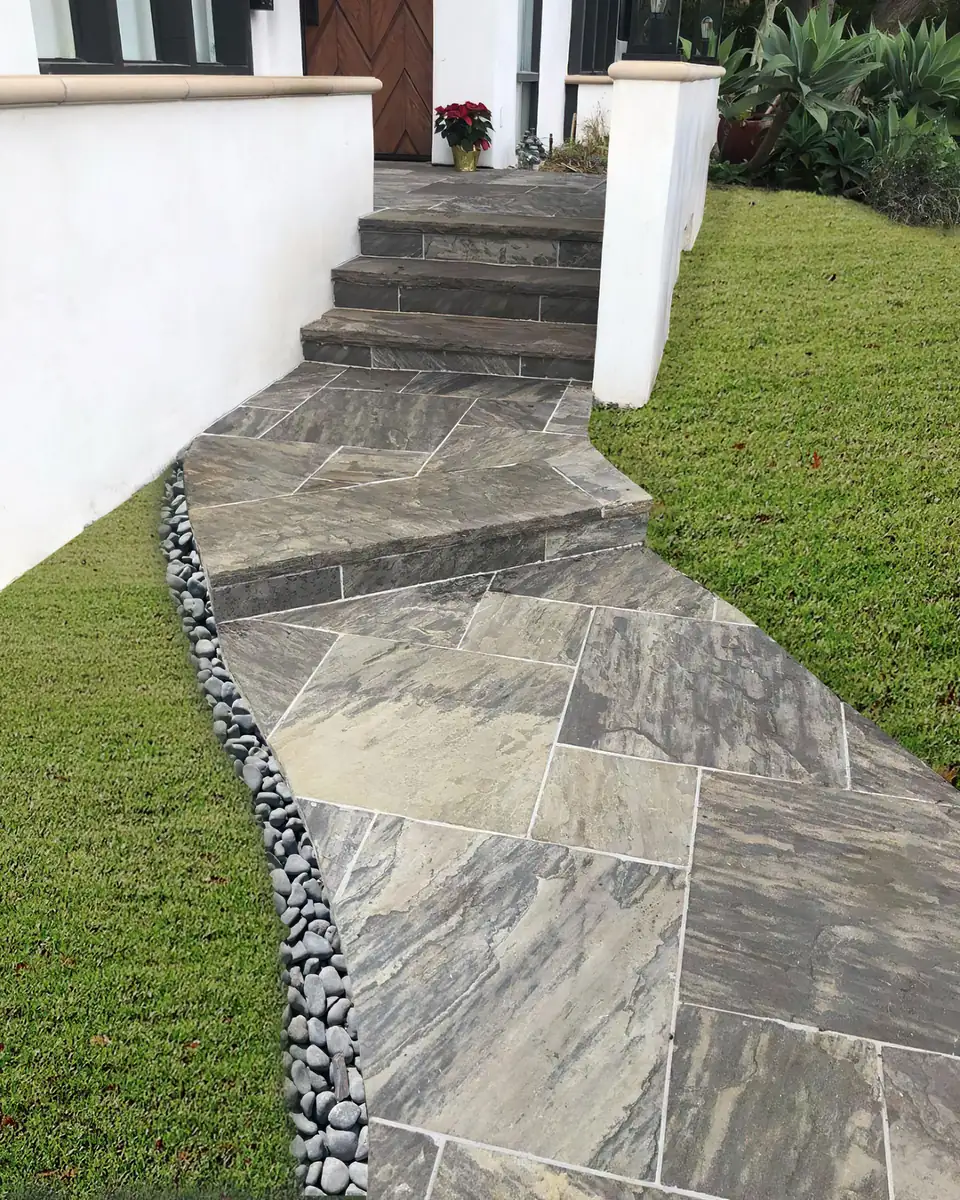
Some projects look best with one stone throughout. Many look better with two or three that work together, such as a flagstone patio, a boulder border and a pebble dry creek. Mixing stone lets you use each material where it performs best, and it adds depth to a yard. The trick is choosing combinations on purpose. This guide covers why to mix, simple ways to tie stones together, and when matching still matters.
Why mix stone
Different stones do different jobs. Flagstone makes a flat surface to walk on. Boulders add height and focal points. Cobbles and pebbles fill dry creeks and pond edges. Wall stone builds seat walls and planters. Using the right stone for each job often means using more than one kind.
Mixing also adds interest. A contrast in color or texture can set off a patio from the garden around it.
Mixing can also help with cost management. You might use a feature stone where people look most, such as around an entry, and a simpler stone in less visible areas. Our staff can help you balance the look with your plan.
Simple ways to tie stones together
Texture counts as much as color. A split-face wall stone next to a smooth tumbled cap, or rough boulders beside polished pebbles, can make both materials look better.
- Share a color: pick stones that share at least one tone, such as a gold vein in a gray stone.
- Contrast on purpose: pair a smooth stone with a rough one, or a light stone with a dark one.
- Repeat: use each stone in more than one spot so it feels planned.
- Match the house: pull colors from your roof, trim or siding.
- Limit the count: two or three stones usually read better than five.
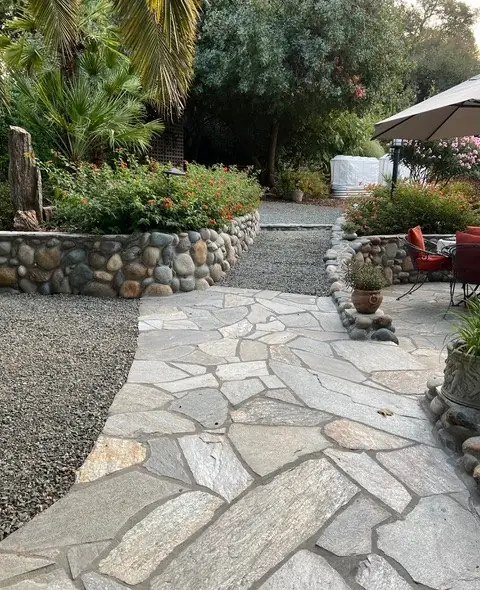
Combinations customers often use
Other pairings to consider are basalt columns as a focal point in a bed of gravel, or a boulder at the corner of a flagstone patio. See specialty stone and gravel.
- Flagstone patio with a wall stone seat wall.
- Boulders with cobbles and pebbles in a dry creek.
- Flagstone field with tumbled flagstone on wall tops or pool coping.
- Stepping stones set in river rock or gravel for a drought-tolerant path.
When matching still matters
Mixing on purpose is different from running short and patching with something else. If you want one stone across a large patio, matching matters, and availability can change. Quarries can lose access in heavy rain, and big orders can use up our stock. Talk about the whole job with our staff up front so we can plan for enough of the same stone.
Let us help you see it
Walk the yard with our staff and set pieces side by side. Bring your landscape plan and a photo of your house. Anna and the staff like hearing about the setting and will tell you what works and what we would not recommend. Start with planning your yard visit.
Take photos of stones together in daylight, since color shifts in shade. Look at them wet as well as dry. Stones that match dry may contrast when wet, and the reverse can happen too.