Stone Steps Ideas
Stone steps can be built from stair treads, large slabs or thick flagstone.
Bluestone treads come 4 to 6 feet long and 2 inches thick, which suits entries and patio steps.
4.8 · 46 Google reviews · 34 years · Woman-owned · Delivery Mon-Sat
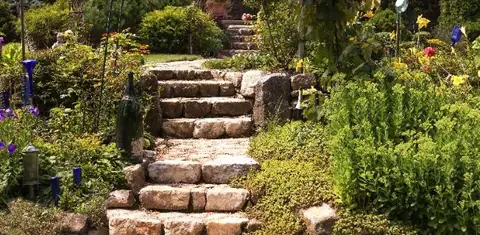
Steps solve a problem that slopes create. They get you safely from the patio to the lawn, from the driveway to the door, or up a hillside garden. Natural stone steps look solid and last a long time. The most important things are safe, even step heights and a stone that feels steady under foot. This guide covers step ideas, stone choices, planning basics, and what to bring when you visit the yard.
Stone step design ideas
Wide, shallow steps feel relaxed and suit garden slopes. Standard-height steps work better at entries where people carry groceries. On a gentle grade, a series of single slabs with gravel or planting between them can replace a path.
Landings help on longer runs. A wide flat stone halfway up gives people a place to pause and makes a steep slope feel easier. Lighting along the edges or under the treads helps at night.
- Bluestone treads at a front entry for a clean, even look
- Large slabs set into a slope as garden steps
- Thick flagstone steps that match a flagstone patio
- Boulders along the sides of the steps as a natural border
Which stone works and why
Bluestone Treads come in lengths of 4 to 6 feet and 2 inches thick, with even surfaces. Bluestone also comes in squares and pattern cuts for landings. Full Range Bluestone offers blue, lilac, green-brown and gunmetal tones.
Slabs make bold single-piece steps. Storm Mountain Slabs are silver quartzite. Bouquet Canyon Slabs are charcoal gray and 3 to 4 feet across by 8 to 9 feet long. Sculpture Stone Slabs are terracotta sandstone concretions. Mt. Moriah also comes in slabs and pancakes. See specialty stone and call to check what is in the yard today.
Planning and installing basics
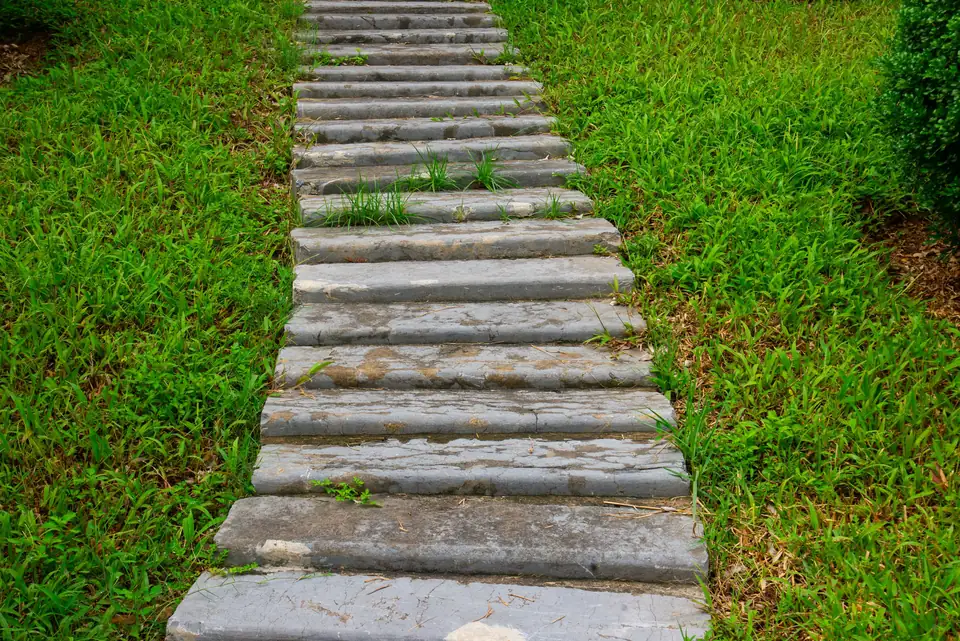
Keep every step in a run the same height and depth. Uneven steps cause trips. Each step needs a firm, compacted base so it does not rock. Heavy treads and slabs need two or more people or equipment.
For very large slabs, we can refer you to a crane placement company. Smaller pieces can be moved with a rented dolly.
Water should run off each tread, not pool on it. Tilt each step very slightly forward. Where steps meet a patio or walkway, keep the stone and finish consistent so the whole route reads as one design. Thick flagstone steps can match a patio, but check that each piece is large and thick enough to stay steady.
What to bring when you visit
Measure the total rise from bottom to top and the width you want. Bring photos of the slope or entry. Tell staff how often the steps will be used and whether they connect to a patio or walkway, so the stone can match.


Rock Talk
Questions we hear a lot
Still unsure? Call the yard at (916) 363-4239. We are happy to talk it through.
What size are bluestone stair treads?
Bluestone treads are 4 to 6 feet long and 2 inches thick. Call to check what is on hand.
Can I use flagstone for steps?
Yes, thicker flagstone can be used for steps, often to match a flagstone patio. Each step needs a firm base.
How do I move large stone slabs?
Smaller pieces can go on a rented dolly. For very large slabs, we can refer you to a crane placement company.
Visit the yard
Come see the stone in person
Walk the yard with us, bring your measurements and a photo of your house, and we will help you pick stone that fits the project and the budget.
5300 Excelsior Road, Sacramento, CA 95827
Get directions
| Monday - Friday | 7:00 am - 4:00 pm |
|---|---|
| Saturday | 7:30 am - 3:00 pm |
| Sunday | Closed |