
Flagstone Walkway Ideas
A flagstone walkway can be a solid path set in mortar or a row of stepping stones set in decomposed granite, gravel or ground cover.
For soft-set paths, 1 1/2 to 2 inch flagstone is thick enough to lay without concrete.
4.8 · 46 Google reviews · 34 years · Woman-owned · Delivery Mon-Sat
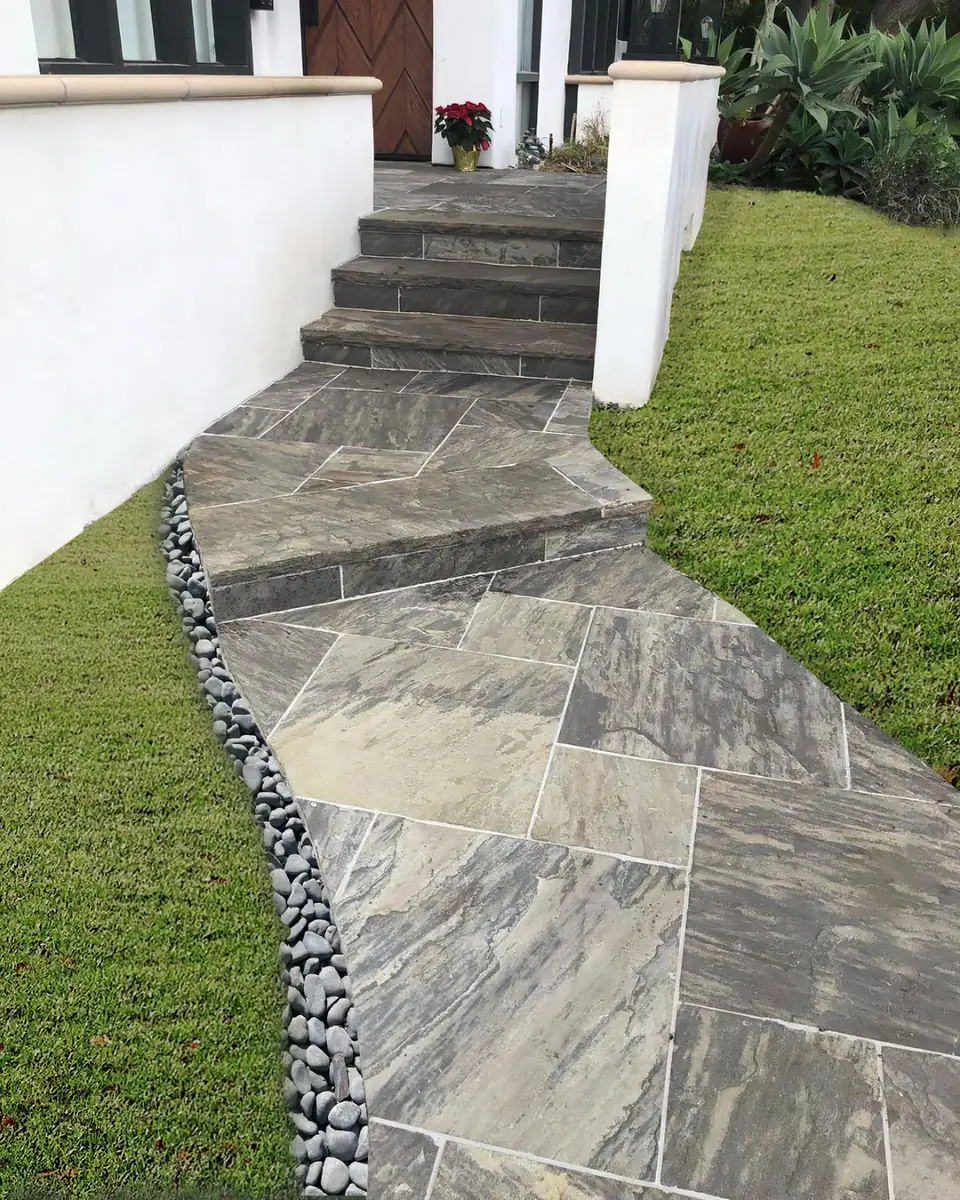
A walkway is often the first stone project people take on. It is smaller than a patio, it solves a real problem, and it changes how a yard feels. A good path gets you from the driveway to the door, or from the patio to the garden, without muddy shoes. Natural flagstone does that job and looks better every year. This guide covers path styles, which stones hold up to foot traffic, and how to plan the spacing.
Walkway design ideas
A front entry walk usually looks best solid and fairly formal, with tight joints. A side-yard or garden path can be looser, with stepping stones set in gravel or low plants.
Curves slow people down and invite them to look around. Straight paths feel direct and work well for daily routes like the trash cans or the side gate.
- Stepping stones set in decomposed granite or gravel
- Mossy surface stone like Flat Lava for a woodland or pond path
- Cut bluestone pieces for a clean, modern entry
- A border of pebbles along the edges to catch runoff
Which stone works and why
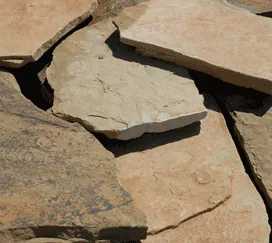
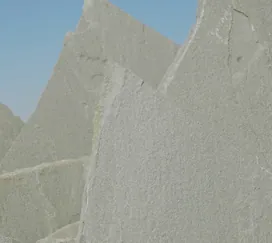
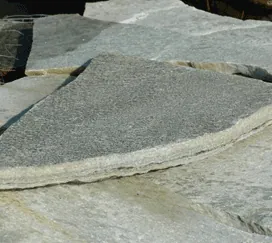
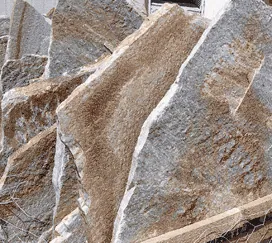
For a walk you use every day, choose a flat, durable stone. Petrified Seashore is a smooth, flat sandstone in buff to dark brown, and Arizona Sandstone Classic Oak adds cream and pink. Bluestone Blue gives a cool, even surface. Silver Amber is a hard white quartzite, and Sunrise is a blonde sandstone with gold, rose and lavender rings.
Surface stones like Flat Lava and Arizona Moss Black carry moss and lichen. They suit a natural garden path or a walk around a pond. Waterwash Coping, smoothed by running water, also works for walkways and around ponds. Stock changes, so call to check what is in the yard today.
Planning and installing basics
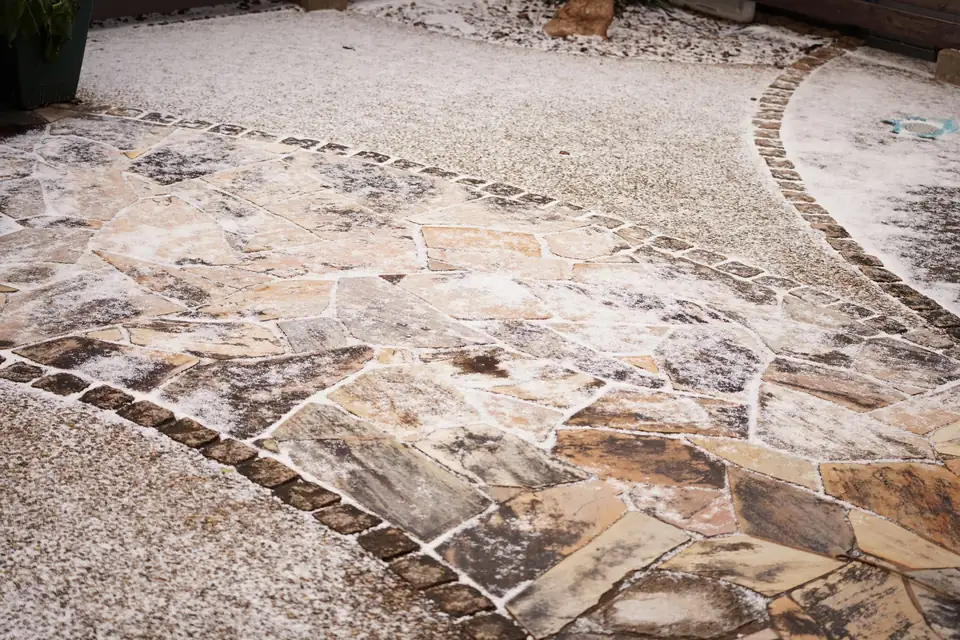
Most walkways are soft-set. Use 1 1/2 to 2 inch stone on a compacted base with sand and decomposed granite. Set stepping stones at a natural stride so people do not have to shuffle or stretch.
Spacing stones farther apart with more decomposed granite saves stone. The tradeoff is that heels can catch in wide joints. Stabilizers like Alliance DG Stabilizer and Gator Dust help lock the joints. Gator Dust needs a 2 to 3 inch gravel base, and Anna recommends 1 inch of sand over the gravel. See the Gator Dust guide.
What to bring when you visit
Measure the length and width of the path and bring the numbers. Note whether it will be solid or stepping stones, and who uses it: kids, guests in dress shoes, or a wheelbarrow. A photo of the house and the path area helps staff match color.



Rock Talk
Questions we hear a lot
Still unsure? Call the yard at (916) 363-4239. We are happy to talk it through.
What is the best flagstone for a walkway?
A flat, durable stone that matches your house. Sandstones, bluestone and quartzites all work. Tell staff how much traffic the path gets and they will suggest options.
Can I set a flagstone walkway without concrete?
Yes. Stone 1 1/2 to 2 inches thick can be soft-set on sand and decomposed granite without a concrete slab.
How far apart should stepping stones be?
Set them at a comfortable walking stride. Test the spacing by walking it before you set the stones, and keep joints tighter where people wear heels.
Visit the yard
Come see the stone in person
Walk the yard with us, bring your measurements and a photo of your house, and we will help you pick stone that fits the project and the budget.
5300 Excelsior Road, Sacramento, CA 95827
Get directions
| Monday - Friday | 7:00 am - 4:00 pm |
|---|---|
| Saturday | 7:30 am - 3:00 pm |
| Sunday | Closed |