
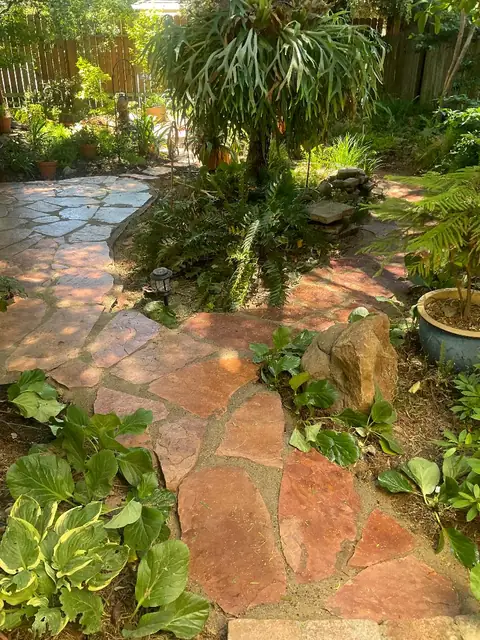
Flagstone and pavers are two of the most popular choices for patios, walkways and pool decks. Both can last for many years when they are installed on a good base. They look and feel different, though, and they go down in different ways. This guide compares the two fairly, so you can decide what fits your home, your plans and your style. We specialize in natural stone and also carry concrete stepping stones and Basalite products.
The look
Flagstone is quarried rock split into flat pieces. Every piece has its own shape, texture and color variation, so no two patios look alike. It fits naturalistic gardens, curving paths and designs that blend into the landscape.
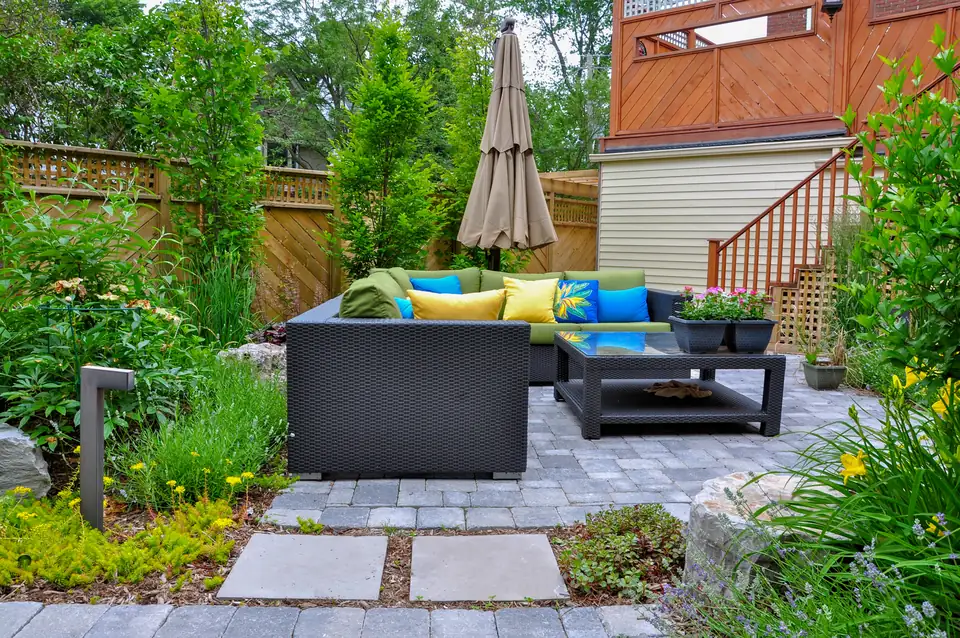
Pavers are manufactured in consistent shapes, sizes and colors. They create crisp, repeating patterns and clean lines. They fit formal layouts, driveways and modern designs.
Feel matters as much as looks. Natural cleft flagstone has a textured surface that many people like underfoot. Pavers offer a smooth, even surface that is easy for furniture legs and rolling carts. Think about how you will use the space day to day.
Installation
Pavers are uniform, so they lay out in a set pattern and fit together tightly. Flagstone is fitted piece by piece, like a puzzle, with some cutting and shaping. When you cut, use water on the blade and a dust mask rated for silica, and follow local safety rules. That takes more judgment, and many people enjoy the craft of it.
Flagstone can be hard set with mortar over concrete or soft set on a permeable base, depending on thickness. See soft-set vs hard-set and the thickness guide.
Both require the same foundations: excavation, a compacted base, drainage slope and solid edges. With either material, most long-term problems trace back to a base that was not compacted well or that holds water.
Side by side
- Shape: flagstone is irregular and natural; pavers are uniform.
- Color: flagstone varies piece to piece; pavers are more uniform, though colors can still shift between batches.
- Joints: flagstone joints vary and can be filled with mortar, decomposed granite or Gator Dust; pavers use tight, even joints.
- Edges: tumbled flagstone offers smooth, rounded edges for coping and wall tops.
- Buying: flagstone is sold by weight on pallets; pavers are usually sold by the piece or by area.
Maintenance
Both need a well-compacted base and good drainage. Both can be sealed. Flagstone sealers can bring out a wet look. Soft-set joints of either kind should not be blasted with a pressure washer, and joint material may need topping off over time. See sealing flagstone.
With flagstone, a stone that cracks or settles can be lifted and replaced, and a soft-set stone is easy to reset. With pavers, individual units can also be lifted and reset. Either way, keeping a few spare pieces from your original order is a smart idea.
Or use both
You do not have to pick only one. Some yards use pavers for a driveway and flagstone for a garden path, or edge a paver patio with natural stone. Bring your measurements, your plan and a photo of your house to the yard. Our staff will help you think through the look and the installation, and quote the stone. Call to check what is in the yard today.