
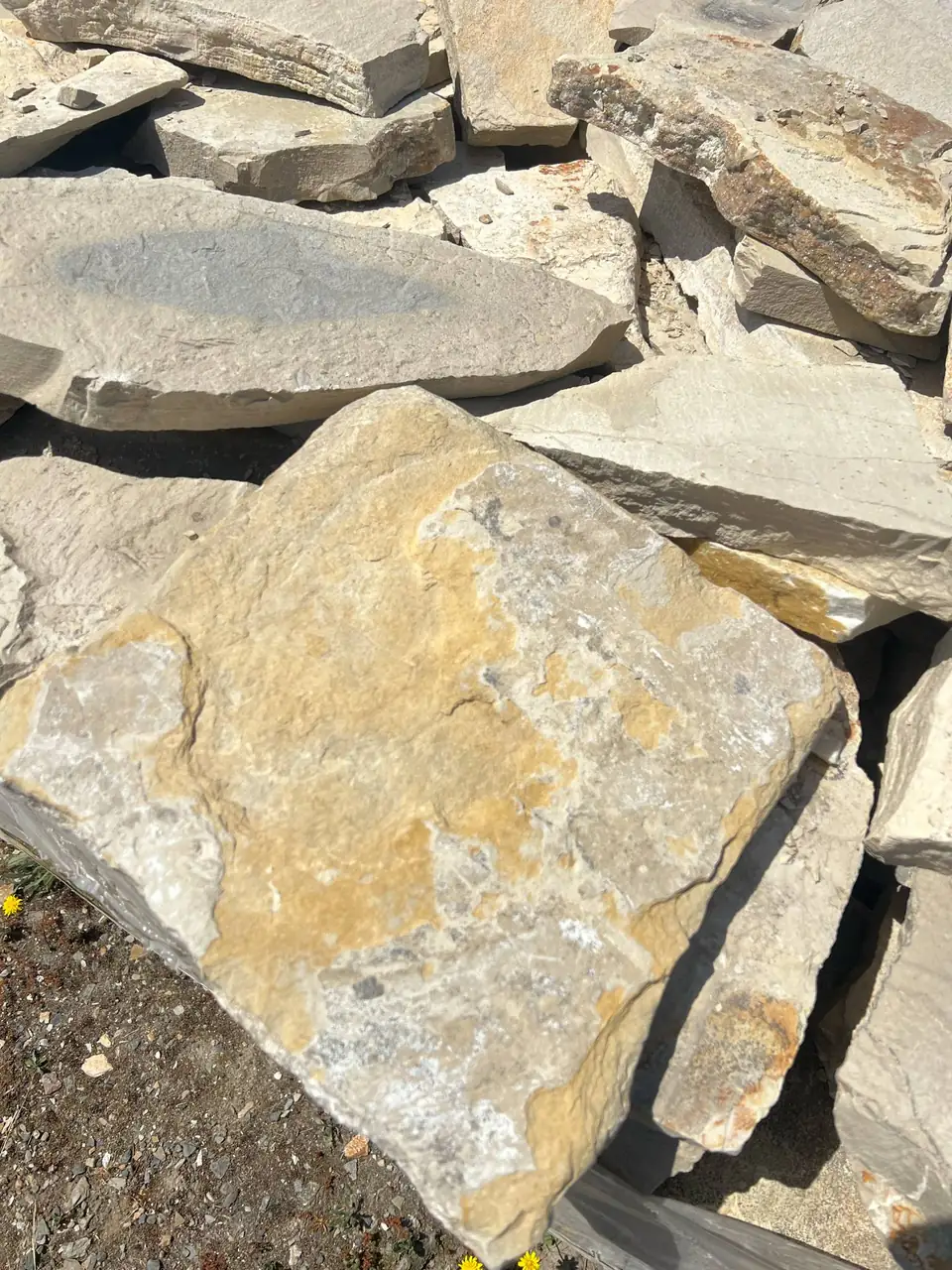
When you buy flagstone, one size does not fit all. The thickness of the stone decides how it should be installed, and the installation decides where it will hold up. Thin stone needs the support of a concrete slab. Thicker stone can rest on a compacted, permeable base. This guide walks through the three cuts our customers ask about most: 1 1/4 inch Select, 1 1/2 to 2 inch stone, and thin veneer. It also covers how traffic and use change the choice.
1 1/4 inch Select: for large, mortared patios
1 1/4 inch Select is flagstone cut in large pieces to a thickness of close to one and one quarter inch. It should be hard set with mortar over concrete. It is a good choice for large patios where you want broad pieces and a clean, permanent surface.
The concrete slab carries the load, so the stone does not need to be thick. Without that slab, thin stone can crack or rock under foot traffic.
Large Select pieces cover ground quickly and leave fewer joints, which gives a calm, open look on a big patio. Because each piece is broad and thin, handle it with care and carry it on edge to avoid snapping it before it is set. If you trim pieces, cut wet and wear eye protection and a respirator rated for silica dust.
1 1/2 to 2 inch: strong enough to soft set
Stone cut between 1 1/2 and 2 inches thick does not need to be hard set. If you want to soft set on sand and decomposed granite, this is the thickness to use. It comes in both small and large pieces and is good for small patios and walkways.
The extra thickness lets the stone bridge small variations in the base without cracking. It still needs a well-compacted base underneath. See soft-set vs hard-set for the difference in installation.
Smaller pieces in this thickness are easy to handle and fit well on curving garden paths. Larger pieces in this range are heavy, so plan on two people or a dolly to move them around the site.
Veneer: thin stone for vertical surfaces
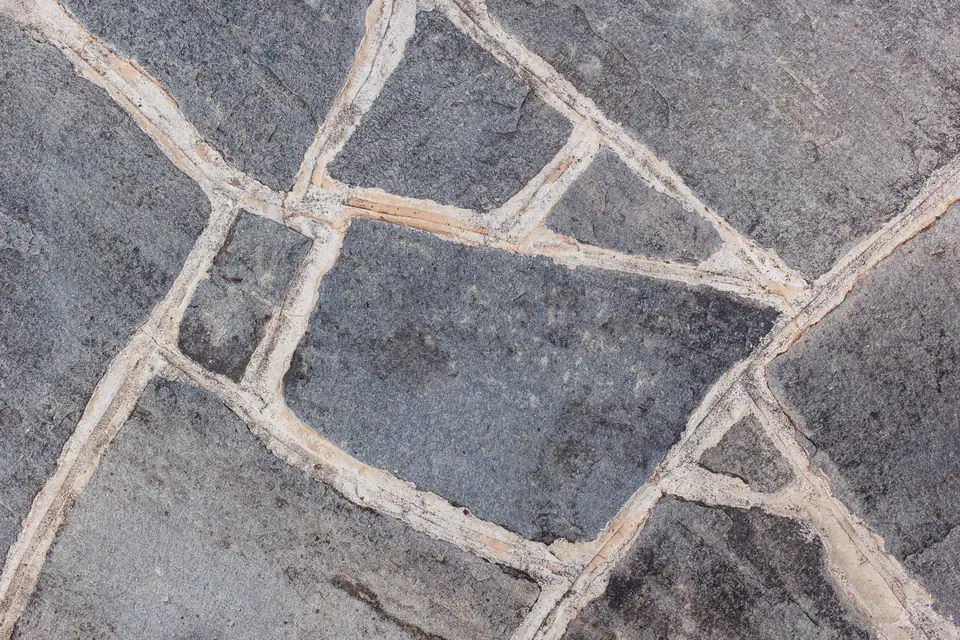
Veneer is thin cut stone, available in small and large pieces. In the trade it is often called "1 1/4 minus," which means no thicker than one and one quarter inch. Veneer should be hard set with mortar over concrete. It is used to face walls, planters, steps and outdoor kitchens. See our stone veneer ideas.
How to choose
Start with where the stone goes and how it will be used, then pick the thickness that matches the base.
If you are unsure what is under an old patio, dig a small test hole at the edge before you shop. Knowing whether you have concrete, gravel or bare soil answers most thickness questions on the spot.
- Existing or planned concrete slab: 1 1/4 inch Select or veneer, mortared.
- No slab, permeable path or patio: 1 1/2 to 2 inch stone on a compacted base with sand and decomposed granite.
- Heavy use or large gatherings: talk with us about thickness and joint spacing before you buy.
- Walls and vertical faces: veneer, mortared over concrete or block.
Bring us the details
Thickness availability varies by stone and by quarry. Tell our staff what you are building and what is underneath it, and we will point you to stones that come in the right cut. Call to check what is in the yard today, or browse our flagstone.