

The most useful thing you can bring to a stone yard is a good measurement. Flagstone is sold by weight, but you plan a patio in square feet. The link between the two depends on the stone you choose, so we do that conversion with you at the counter. Your job is to get an accurate square footage. This guide shows how to measure simple and odd-shaped areas, how much extra to plan for, and how to use our flagstone calculator.
Measure with a tape, not a guess
Always measure the areas where you want stone with a tape measure. Sketch the space on paper and write each measurement on the sketch. Measure in feet, and round up to the nearest half foot. Bring the sketch to the yard with you.
Measure each area separately. A patio, a side path and a few stepping stones may each call for a different stone or thickness, so keep their numbers apart. Note any areas where you want larger or smaller pieces, too.
Simple shapes
- Rectangles and squares: length times width. A 12 by 15 foot patio is 180 square feet.
- Circles: measure from the center to the edge (the radius). Multiply the radius by itself, then by 3.14. A circle with a 6 foot radius is about 113 square feet.
- Triangles: base times height, divided by 2.
- Walkways: length times average width. For a curving path, measure the length along the center of the curve.
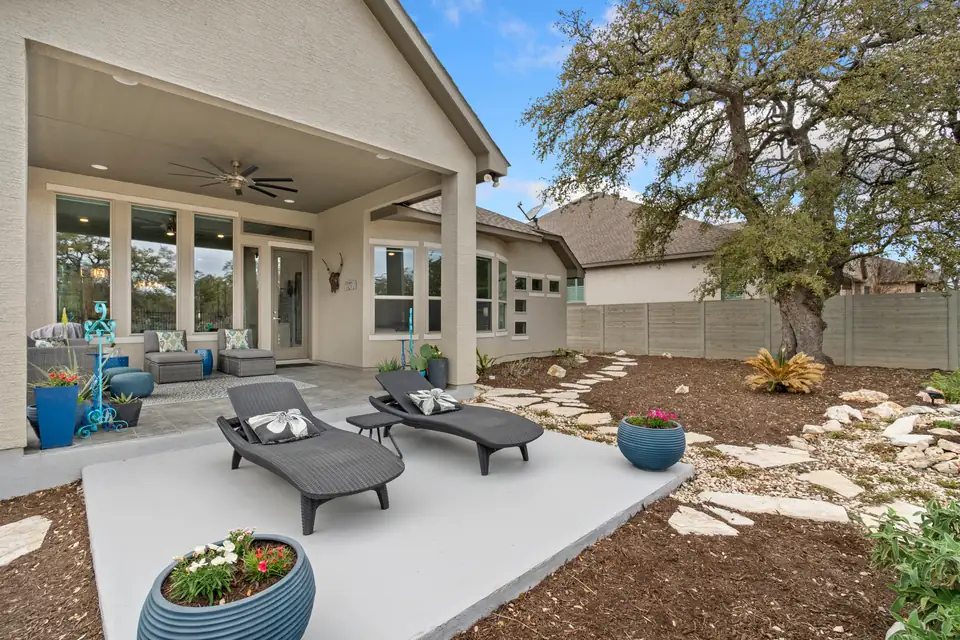
Irregular areas: split them into pieces
Most real yards are not perfect shapes. The easy fix is to break the area into shapes you can measure.
Do not worry about perfect precision. A few tenths of a square foot will not change your order. What matters is that no area is left off the sketch.
- Draw the outline of the area on paper.
- Divide it into rectangles, triangles and partial circles.
- Measure and calculate each piece on its own.
- Add the pieces together for the total square footage.
- Add extra for cuts and fitting, then bring the total to the yard.
Add extra for cuts and fitting
Natural flagstone is irregular. You will trim pieces to fit edges and each other, and some offcuts will be too small to use. Cutting stone makes silica dust, so keep water on the blade, wear breathing protection and follow the saw maker's safety rules. Plan to order a little more than your measured area. Irregular layouts with lots of edges, curves or tight joints need more extra than a simple square patio. Our staff can suggest how much for the stone and layout you choose.
Joint width matters too. Wider joints filled with decomposed granite use less stone, but read the trade-offs in soft-set vs hard-set first.
Why we convert square feet to weight for you
How many square feet a ton of flagstone covers depends on how thick the stone is and how dense that type of rock is. A thicker cut or a heavier stone covers less area per ton. That is why we do not publish one coverage number for every stone.
Bring your square footage and your stone choice, and we will give you a weight to order and a quote. If your job is large and matching stone matters, tell us the whole job up front. Use the flagstone calculator to total your areas before you visit.